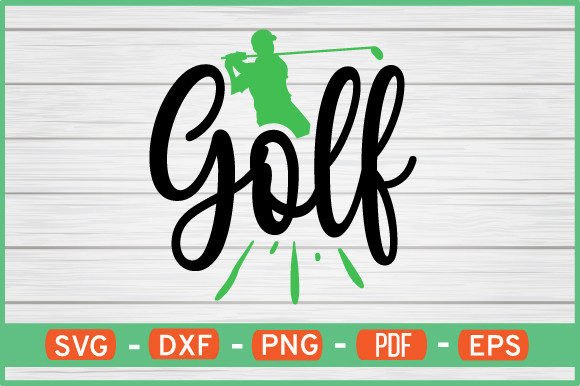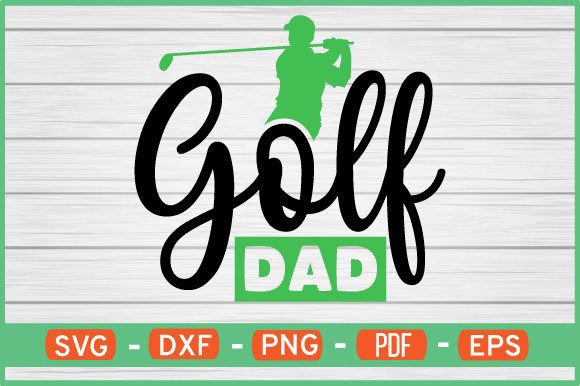
Golf Dad T-Shirt Designs SVG
First Impressions: A Friendly, Clean Nod to Fatherhood and Fairways
Opening the Golf Dad T-Shirt Designs SVG zip file feels familiar—no bloated folders, no mystery files. Just one SVG and one DXF, cleanly named and ready for import. As someone who’s stitched hundreds of dad-themed designs—from “World’s Okayest Dad” to full-course cart illustrations—I immediately notice how this design lands: warm but not cutesy, sporty but not overly technical. It’s got that relaxed confidence you’d want on a weekend tee time or a Father’s Day brunch shirt. The layout is balanced: a compact golf club graphic paired with clean, bold lettering—“Golf Dad”—that reads well even at 3.5 inches wide. No tiny serifs, no overlapping elements, no unnecessary flourishes. That’s a win before the needle even touches fabric.
Where This Design Actually Shines (and Where It Might Struggle)
I tested Golf Dad T-Shirt Designs SVG as the centerpiece for a custom embroidered cotton tote bag—something I’m offering in my small shop for Father’s Day. On medium-weight canvas, with tear-away stabilizer and 40-weight polyester thread, it stitched cleanly in under 90 seconds. The lettering held crisp edges, and the club icon read clearly without needing extra underlay. That tells me this design works beautifully for custom apparel, tote bag design, sweatshirt embroidery, and even lightweight apron branding—especially for golf-themed boutiques or family-owned driving ranges.
But let’s be real: it’s not built for every surface. I tried it on a ribbed knit baby onesie—same stabilizer, same hoop—and the satin stitch on the club handle softened too much. Stretchy fabric eats fine detail. Similarly, on a dark navy cap, the lack of built-in underlay (common in dedicated machine embroidery files) meant I had to manually add a light tack-down layer before stitching. So while the Golf Dad T-Shirt Designs SVG is perfectly serviceable for embroidered patch prep or pillow cover accents, it needs thoughtful adaptation for caps, baby embroidery, or curved surfaces. It’s also not ideal for tiny lettering applications—don’t try shrinking it below 2.75 inches and expect legibility.
What It Adds (and Doesn’t Add) to Your Finished Product
This isn’t a flashy, high-density machine embroidery design with gradients or shadow layers—it’s a flat, vector-based graphic optimized for cutting, not stitching. That means its strength lies in clarity, not complexity. When stitched well, it boosts product value by feeling intentional and cohesive—not like a clipart afterthought. Customers recognize sincerity in simplicity: a clean “Golf Dad” on a charcoal crewneck reads as thoughtful, not generic. That builds customer trust and supports brand consistency, especially if you’re curating a line of dad-focused handmade products.
That said, don’t expect automatic stitch density optimization. Since this is an SVG/DXF digital embroidery file, not a pre-digitized embroidery file, you’ll need to digitize it yourself—or hire someone—to turn it into a true applique design or layered fill stitch layout. That’s not a flaw—it’s context. If you’re an Etsy seller offering personalized gifts, this gives you flexibility. If you’re a beginner embroiderer without digitizing software, it’s a heads-up: this isn’t plug-and-stitch-ready for your Brother or Janome.
Practical Notes Every Embroidery Designer Should Check
- Test first: Always run Golf Dad T-Shirt Designs SVG on scrap fabric matching your final product’s weight and texture—especially for textured fabrics like terry cloth or linen-look tea towels.
- Thread color contrast matters: On light fabric, black or navy thread pops. On dark fabric, go for white, yellow, or kelly green—but verify visibility in a printable mockup.
- Hoop size isn’t specified, so measure the design’s bounding box before hooping. For most standard projects, a 4×4 hoop works—but confirm before committing to a commercial embroidery job.
- Inspect corners and curves: Zoom in on the club’s grip and letter terminals. Vector sharpness doesn’t always translate to stitch fidelity—adjust pull compensation if needed.
- Stabilizer choice is non-negotiable: Use cut-away for knits, tear-away for stable wovens. Skipping this step turns crisp lettering into wobbly mush on thin fabric.
- Licensing is your responsibility: This is a digital download only—review the seller’s terms before selling finished items or bundling it into your own design assets for resale.
Fitting Into Real Creative Workflows
I recently used Golf Dad T-Shirt Designs SVG as the anchor for a holiday gift bundle: embroidered kitchen towel + mini golf ball keychain + printable scorecard. Because the design scales cleanly, I kept visual continuity across formats—same font weight, same spacing rhythm. That kind of cohesion is gold for small shop product lines or craft fair displays. It also translated smoothly into a black-and-white printable mockup for my Etsy listing—no jagged edges, no blurry anti-aliasing.
For creative entrepreneurs building a niche around fatherhood, sports, or lifestyle gifting, this design fits neatly into existing workflows. It’s not groundbreaking—but it’s reliable, adaptable, and quietly professional. It won’t wow at 20 feet, but it earns nods at 2 feet: from dads squinting at their new Sunday tee, from boutique buyers scanning racks, from Etsy shoppers comparing “personalized gift” options side-by-side.
A Final Thought for Makers Who Care About Craft
Good design isn’t about how many bells it has—it’s about how gracefully it serves its purpose. Golf Dad T-Shirt Designs SVG serves its purpose well: it’s clear, scalable, and emotionally on-point. It won’t replace a fully digitized embroidery file for high-volume production, but for handmade product creators, apparel decorators, and digital product sellers who value control and authenticity? It’s a thoughtful, usable piece of Graphics—one that belongs in a working designer’s Crafts toolkit, not just a folder of unused downloads.