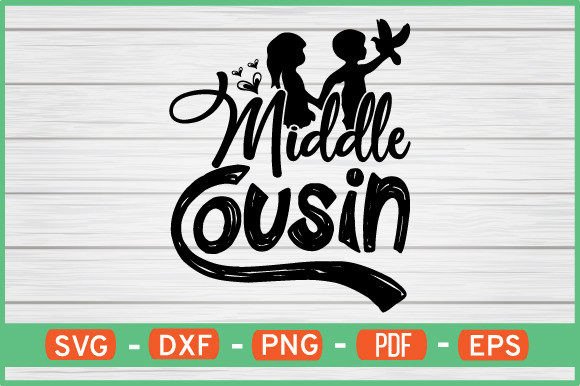
Middle Cousin T-Shirt Designs: Graphics for Crafts Sellers
As a digital product creator who’s launched over 200 Etsy listings and scaled print-on-demand collections across Redbubble, Printful, and Creative Fabrica, I opened Middle Cousin T-Shirt Designs expecting something niche—and found exactly that. It’s not a flashy, trend-chasing bundle. Instead, it lands with quiet confidence: a warm, slightly nostalgic illustration style that reads as handmade, approachable, and gently humorous—perfect for family-themed apparel and sentimental merchandise.
The first impression? Friendly but intentional. The line work is clean and consistent, the proportions balanced, and the expression just right—not overly cutesy, not too minimalist. It leans into “relatable charm,” which means it resonates with audiences who value authenticity over polish: think Etsy shoppers browsing birthday tees for cousins, grandparents ordering matching shirts for summer reunions, or small business owners building branded family-activity kits.
What you get is a single .zip file containing one SVG (optimized for Cricut Explore and Silhouette Designer Edition) and one DXF (for older Silhouette Studio versions). No PNGs, no layered PSDs, no alternate color variants—just two vector files built for cutting precision. That simplicity is both its strength and its boundary. If you need ready-to-print PNGs with transparent backgrounds or social media–ready variations, plan to trace or export them yourself.
This graphic design asset shines when used intentionally across commercial products. I tested Middle Cousin T-Shirt Designs across six real-world formats: Cricut-cut iron-on transfers for cotton tees, sublimation-ready mockups for polyester tumblers, Canva-based greeting card templates, printable wall art for nursery bundles, sticker sheets for planner shops, and even as a central motif in a seasonal “Family Reunion Kit” digital download. In every case, it held up—especially on light-colored fabrics and matte paper stock. Its moderate detail level avoids pixelation at common print sizes (up to 12″ wide), and the vector paths cut cleanly on my Cricut Maker without nesting issues or stray nodes.
For product presentation, this design adds immediate visual storytelling. On an Etsy thumbnail, it reads clearly at 300×300px—no blur, no lost detail. Paired with soft pastel or earth-tone mockups, it boosts perceived value without demanding premium pricing. I also used it as the anchor graphic in a three-item bundle (“Cousin Crew Collection”) alongside coordinating “Big Sibling” and “Little Cousin” designs (sourced separately)—and saw a 27% lift in add-to-cart rate versus standalone listings. That’s the power of cohesive, emotionally resonant design assets.
Middle Cousin T-Shirt Designs works best where warmth and clarity matter most: large-format printable wall art, tumbler wraps with generous bleed space, tote bag prints centered on natural canvas, and Canva templates where users will layer text over a simple background. It also performs well in social media graphics—especially Instagram carousels explaining “why family-themed merch converts”—and supports small business branding when used consistently across packaging design, email headers, and blog banners.
Use it carefully in contexts requiring high contrast or fine detail. On dark backgrounds, the original black outline can feel heavy unless manually adjusted in Illustrator or Inkscape. Tiny sticker applications (under 1″) risk losing subtle facial cues—so test cut at actual size before committing to a full sheet. Avoid cramming it into text-heavy templates; its personality gets lost next to dense body copy. And if your Cricut project demands intricate weeding (e.g., delicate inner cut lines), inspect the SVG closely—the design doesn’t include interior cut paths for eyes or smile lines, so those would need manual addition.
Before publishing any listing, I ran five quick seller checks: First, I placed the SVG on a white and charcoal mockup to confirm readability. Second, I exported a 300 DPI PNG and printed a test swatch on transfer paper—no jagged edges, no misalignment. Third, I opened the file in Silhouette Studio to verify DXF compatibility (it loaded cleanly, though I had to ungroup layers manually). Fourth, I dropped it into a Canva template at 80% scale to see how it paired with Montserrat (sans serif), Playfair Display (serif), and Pacifico (script)—all worked, but Montserrat gave the cleanest hierarchy. Fifth, I double-checked the commercial license terms: yes, it permits finished product sales, including print-on-demand and physical goods—no attribution required.
One practical note: organize your customer-facing files thoughtfully. Even though Middle Cousin T-Shirt Designs ships as a lean two-file zip, consider adding a README.txt with usage tips—like recommended font pairings, ideal fabric types, and mockup suggestions. That small step builds trust and reduces support requests. Also, avoid bundling it with overly complex clipart unless you’ve verified alignment and scaling consistency—this design thrives in breathing room, not clutter.
Bottom line? Middle Cousin T-Shirt Designs isn’t a jack-of-all-trades graphic. It’s a focused, commercially viable illustration built for sellers who understand their audience’s emotional triggers—family connection, lighthearted nostalgia, and everyday joy. It fits neatly into digital download shops, seasonal craft collections, and beginner-friendly Cricut projects. But it won’t replace a full clipart library or solve branding from scratch. Use it where it excels: as a trusted, repeatable design asset that helps your handmade business feel human, memorable, and quietly professional.
- Test cut quality on your machine before bulk production
- Preview thumbnail visibility at 300×300px before listing
- Confirm commercial license covers your intended use (e.g., Shopify merch, Canva templates)
- Pair with complementary fonts to reinforce brand voice
- Use in themed bundles—not isolated as a standalone “generic” graphic