Baking Mode SVG: Crafts & Graphics for Warm, Handmade Brands
As a graphic designer who’s built visual identities for over a dozen small-batch bakeries, artisanal food shops, and seasonal Etsy brands, I opened Baking Mode on T-Shirt Designs Svg expecting charm—and found something more: a tightly crafted, emotionally resonant graphic design asset that lands with authenticity. This isn’t generic clipart. It’s a warm, slightly playful, hand-drawn illustration style rendered in clean vector form—ideal for a client launching “The Butter & Bloom Bakery,” a local pop-up series, or a holiday cookie subscription box.
A First Impression That Feels Intentional, Not Stock
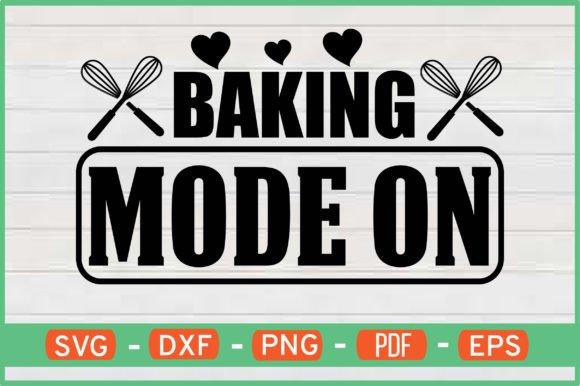
The moment I unzipped the file, I saw why this works beyond novelty: it balances approachability with polish. The icon features a whimsical oven mitt holding a whisk, with subtle steam curls and a soft rounded type treatment reading “BAKING MODE.” No harsh edges, no over-rendered shadows—just confident linework and intentional negative space. It evokes nostalgia without leaning into kitsch, and feels handmade without sacrificing scalability. For a client whose brand voice is “thoughtful, joyful, and rooted in craft,” this sets an immediate tone.
Where It Shines in Real Client Projects
Baking Mode on T-Shirt Designs Svg excels where warmth and recognizability matter most:
- Product mockups—especially t-shirts, aprons, and ceramic mugs—where its organic shape reads clearly at mid-size (8–12 inches wide) and holds presence on textured fabrics;
- Social media graphics for Instagram Reels thumbnails or Pinterest pins—its bold silhouette and clear focal point stop scrollers instantly;
- Packaging design for cookie tins, gift boxes, or bakery bags—used as a corner accent or seal, it adds personality without competing with ingredient lists or branding;
- Cricut projects and Silhouette-based merchandise—thanks to the included SVG and DXF files, it cuts cleanly on vinyl, iron-on, and heat-transfer material;
- Printable designs for recipe cards, baking journal inserts, or workshop handouts—its vector nature ensures crisp output at any scale;
- Brand identity support elements, like email signature icons, website banners, or Shopify banner accents—where it complements, rather than replaces, a primary logo.
Where to Use It With Intention—Not Assumption
This isn’t a universal solution. As a working designer, I flag these scenarios for careful testing:
- Small sizes (<50px wide): Fine details like whisk tines or steam lines blur. Always test at actual usage size—especially for app icons or favicon variants;
- Low-contrast backgrounds: On beige kraft paper or oatmeal-toned packaging, contrast drops. Run a quick grayscale check—it must hold legibility in black-and-white;
- Minimalist or corporate branding: If your client’s aesthetic is monochrome, serif-driven, or architectural (think “artisanal sourdough meets Swiss typography”), this may clash unless deliberately softened or simplified;
- Crowded layouts: Paired with dense text blocks or multiple illustrations, it can overwhelm. Use it as a singular anchor—not one element among many.
Design Performance Beyond Aesthetics
In real-world use, Baking Mode on T-Shirt Designs Svg strengthens emotional appeal and audience engagement by signaling craft, care, and human touch—key differentiators for handmade business owners competing against mass-produced alternatives. It boosts visual trust when paired with authentic photography (e.g., flour-dusted hands, rustic countertops), and reinforces recognition across touchpoints: from a sticker on a shipping label to a Canva template used by the client’s social media manager.
That said, hierarchy remains non-negotiable. When layered over photos or patterned backgrounds, always verify readability. I routinely place it on three real mockups: light cotton tee, dark ceramic mug, and matte kraft box—then adjust stroke weight or add subtle drop shadow only if needed. Never assume the default version fits every context.
Practical Designer Notes Before Client Use
Before dropping this into a live project, I run these checks:
- Preview the SVG in Illustrator and confirm all paths are closed and editable—no embedded raster bits;
- Test the DXF in Silhouette Studio to ensure cut lines align; some auto-traced DXFs shift slightly;
- Convert to outlines and pair with 3–4 font families: a friendly sans (like Quicksand), a warm script (Dancing Script), a sturdy serif (Cormorant Garamond), and a bold display font—to assess visual harmony;
- Export PNGs at 300dpi and 72dpi, then zoom to 200% to inspect anti-aliasing and edge smoothness;
- Verify commercial license scope—this is a digital product intended for resale in physical goods (t-shirts, mugs, stickers), but not for redistribution as a standalone design bundle;
- Run a print test on both coated and uncoated stock—if used for packaging or printed collateral.
Final Verdict: A Thoughtful Addition to Your Design Assets Toolkit
Baking Mode on T-Shirt Designs Svg isn’t just another SVG design—it’s a mood-setter, a brand amplifier, and a time-saver for designers supporting creative marketplace sellers, Etsy product launches, and local food entrepreneurs. Its strength lies in specificity: it doesn’t try to be everything. It’s warm, scalable, commercially viable, and stylistically cohesive with modern handmade business aesthetics. For campaigns centered on comfort, community, and craft—especially those rooted in food, home, and seasonal celebration—it delivers consistent, professional-grade impact.
Just remember: great design assets don’t replace strategy—they elevate it. Use Baking Mode on T-Shirt Designs Svg where it deepens meaning, not where it fills space. And always, always test it in context—not just on screen, but on fabric, paper, ceramic, and pixel.